
What are the top startup venture studios for SaaS?
Short answer
The top startup venture studios for SaaS include Hexa, super{set}, Entourage, and Pioneer Square Labs. According to Ross Dawson, Hexa has co-founded over 50 companies with a portfolio valuation near €5 billion. These studios originate business concepts, supply shared technical plumbing, and pair ideas with operating founders. They typically retain 30% to 60% initial equity, which requires structural cap table planning prior to institutional Series A fundraising.
Source: Vervelio, https://vervelio.com/blog/what-are-the-top-startup-venture-studios-for-saas

Leading B2B SaaS Venture Studios#
Navigating the venture studio model requires evaluating how institutional studios originate software businesses and structure early development.
- Identify
- Architect
- Build
- Launch
- Scale
Hexa (formerly eFounders)#
Hexa, which operated previously under the name eFounders, is a Paris-based startup venture studio that co-founds B2B SaaS platforms with executive operators (rossdawson.com, 2021). The organization originates business concepts internally, pairs those ideas with recruited entrepreneurs, and embeds alongside them for roughly 12 months until the venture closes a seed financing round.
According to an analysis published by Ross Dawson, Hexa has created more than 50 companies, yielding 12 exits and three companies valued above $1 billion (rossdawson.com, 2021), including Front, Aircall, Spendesk, Yousign, and Swan. By entering ventures as an operating co-founder, Hexa reports its portfolio value near €5 billion (thestartupvc.com, 2025). Its model relies on intensive operational collaboration, reducing early discovery chaos before handing the reins to the long-term executive team.
super{set}#
Operating out of San Francisco, super{set} functions as an enterprise startup studio centered on data-driven software companies (techcrunch.com, 2019). As reported by TechCrunch (2019-10-02), super{set} provides shared engineering code, reusable building blocks, and an operational playbook named "super{set} Code" to prevent newly formed companies from reinventing baseline enterprise tools.
The super{set} Code framework focuses on eliminating duplicated developer cycles across customer data management, machine learning pipelines, and revenue operations (techcrunch.com, 2019). The studio structure balances centralized code assets with tailored go-to-market execution plans, allowing incoming engineering teams to bypass early plumbing work.
Entourage#
Entourage is an early-stage venture studio and venture fund established to back and co-build high-growth European B2B SaaS platforms from scratch. Entourage launched under the leadership of Pieterjan Bouten, who previously co-founded and served as CEO of Showpad, combining committed fund capital with studio incubation resources.
The firm splits its execution across two arms: Entourage Studio, which focuses on company creation and incubation, and Entourage Capital, which provides dedicated early-stage investment. The incubation model matches seasoned software operators with greenfield enterprise concepts, focusing early resources on product iteration and initial customer acquisition.
Regional Studios: Pioneer Square Labs and ISHIR Texas Venture Studio#
Beyond national platforms, regional venture studios target geographical startup corridors to incubate software platforms. According to Waveup (2025-02-25), Pioneer Square Labs operates out of Seattle, concentrating its venture studio and investment efforts specifically on B2B SaaS startups (waveup.com, 2025).
In the American South, ISHIR's Texas Venture Studio operates out of Dallas-Fort Worth, focusing on co-founding digital products, B2B SaaS platforms, and artificial intelligence software systems (ishir.com, 2025).
| Venture Studio | Primary Headquarters | Core Focus Area | Sourced Portfolio or Fund Milestone |
|---|---|---|---|
| Hexa | Paris, France | European B2B SaaS | >50 companies created; near €5B portfolio valuation (rossdawson.com, 2021) |
| super{set} | San Francisco, USA | Enterprise Data & SaaS | Proprietary "super{set} Code" shared tooling architecture (techcrunch.com, 2019) |
| Entourage | Europe | European B2B SaaS | Dedicated fund for incubation and studio co-building |
| Pioneer Square Labs | Seattle, USA | Regional B2B SaaS | Pacific Northwest venture studio model (waveup.com, 2025) |
| ISHIR Texas Venture Studio | Texas, USA | B2B SaaS & AI Software | Digital product and AI enterprise platforms (ishir.com, 2025) |
Operational Infrastructure and Shared Plumbing in SaaS Studios#
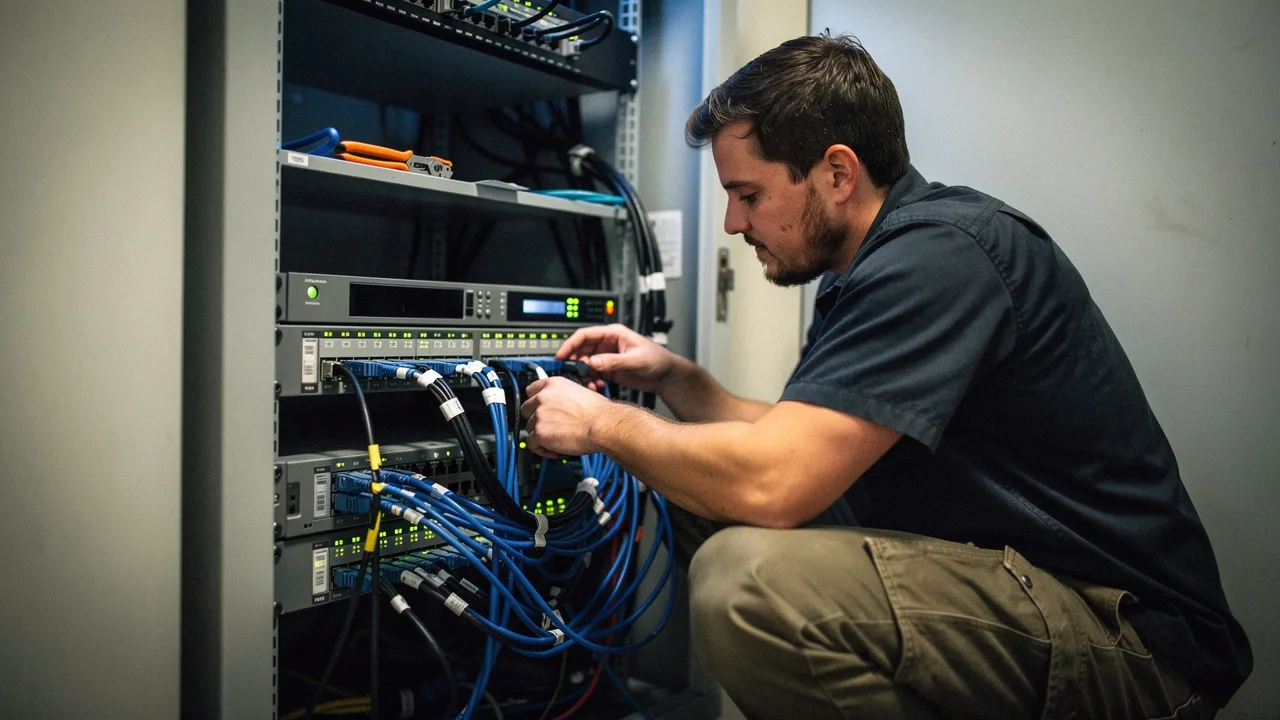
Venture studios operate primarily on the premise that shared operational infrastructure accelerates product validation. A first-time startup founder commonly exhausts substantial capital configuring routine corporate operations, including legal incorporation, human resources, accounting, and compliance baselines (avanteventures.com, 2026). Avante Ventures reported (2026-01-18) that by delivering this shared plumbing on day one; venture studios route approximately $300,000 to $500,000 (avanteventures.com, 2026) of effective capital per venture toward direct product engineering and traction instead of back-office overhead.
Technical shared plumbing works similarly across software codebases. In a case study by ClickIT (2025-11-13), venture studio 25 Madison upgraded its core Next.js application boilerplate by integrating Nest.js to establish a more stable backend architecture (clickittech.com, 2025). The integration incorporated infrastructure-as-code automation leveraging Terraform, GitHub Actions, and AWS ECS containers.
Spinout tech stack migration overhead = Total shared studio modules - Fully decoupled independent services
Fractional engineering capacity and shared design libraries further amplify efficiency. As recorded by La Boétie (2026-05-22), executing a multi-vertical studio setup allowed an engineering team to carry fractional developer capacity across four software properties while reusing a unified payment-rails layer and design system (laboetie.io, 2026).
Once boilerplate integration conflicts or complex multi-tenant migrations start draining internal resources, that is the point to bring in Software Development and SaaS help. Establishing clear operational separation early ensures that shared components do not entangle the product when the time comes to spin the venture out into an independent entity.
Equity Distribution and Cap Table Dynamics#
Venture studios capture meaningful equity stakes in exchange for initial seed funding, ideation, and shared execution services. Vault Fund also notes that when a venture studio operates as a institutional co-founder and retains over 30% (vaultfund.com) of initial equity, it establishes distinct dynamics on the startup's cap table.
Founder equity percentage = 100% - Studio equity stake - Option pool - Early seed investors
High studio ownership stakes introduce downstream financing hurdles. Downstream venture capital investors frequently view a startup capitalization table as broken when operating founders hold less than 50% (thestartupvc.com, 2025) of the equity, citing concerns over compromised operational incentives. When a studio absorbs more than 50% (thestartupvc.com, 2025) equity, the recruited executive risks feeling like an employee rather than an owner, which can prompt leadership departures during difficult market conditions. Founders who require 80% or more (thestartupvc.com, 2025) equity are better aligned with traditional venture capital routes.
To solve these downstream objections, mature venture studios frequently implement structural equity adjustments. The Startup VC (2025-12-11) highlights that studios regularly agree to dilute disproportionately in future financing rounds. Or they write formal recapitalization provisions into corporate charters to refresh the founder equity pool prior to institutional Series A rounds (thestartupvc.com, 2025).
Technical Debt Considerations in Rapid Studio Delivery#

Accelerating development via pre-built studio codebases presents distinct engineering trade-offs. Technical debt serves as an engineering construct for evaluating the direct tension between rapid product delivery and long-term software sustainability (sei.cmu.edu, 2022). Technical debt accumulates during initial construction when key architectural decisions are deferred or executed poorly, representing an invisible systemic element caused by missing complete architectural requirements (www.sei.cmu.edu, 2022-08-22).
Studio delivery frameworks emphasize releasing minimum viable products rapidly to validate customer demand. However, the Software Engineering Institute observes that following an aggressive initial delivery strategy can generate uncontrolled implementation expenses that later demand substantial system re-architecting, undermining the long-term sustainment of the codebase (sei.cmu.edu, 2022).
Managing this transition requires treating early studio boilerplate as a provisional framework, auditing external dependencies continuously before transferring codebase governance to the full-time engineering staff.
To prepare for an institutional spinout, technical leaders should execute this engineering handoff sequence:
- Audit shared libraries to identify studio-owned proprietary dependencies.
- Decouple hardcoded infrastructure scripts from centralized studio cloud environments.
- Establish dedicated, continuous integration and deployment pipelines using independent team credentials.
- Execute comprehensive regression tests across all core billing and authentication boundaries.
- Rebalance developer roadmaps to systematically retire architecture-level technical debt before the Series A raise.
| Attribute | Venture Studio Model | Traditional Venture Capital |
|---|---|---|
| Typical Equity Stake | 30% to 60% equity retained by the studio entity | Minority stake; founders typically retain 80% or more early on |
| Operational Involvement | Hands-on co-founding; provides shared plumbing, codebases, and recruiting | Board-level governance, strategic advising, and network access |
| Cap Table Dynamics | Downstream VCs may view founder equity below 50% as broken; requires recaps | Standard cap table structures oriented around operating founder control |
| Ideal Founder Profile | Domain experts seeking validated concepts and technical infrastructure | Independent operators with a proprietary vision requiring standalone autonomy |
| Capital Routing Impact | Bypasses administrative overhead, saving ~$300K-$500K in effective capital | Substantial early pre-seed capital spent configuring basic corporate plumbing |
| Venture Studio | Primary Tech Stack & Architecture | Operational Delivery Mechanism | Primary SaaS/Enterprise Focus |
|---|---|---|---|
| 25 Madison | Next.js boilerplate, Nest.js, Terraform, AWS ECS, GitHub Actions | Standardized boilerplate augmentation with automated testing frameworks | AI-native applications and cross-industry software |
| super{set} | Proprietary "super{set} Code" shared repositories and engineering tools | Centralized building blocks to prevent reinventing boilerplate code | Customer data management, machine learning, and ad yield |
| La Boétie | Shared design systems and cross-property payment-rails layer | Fractional engineering capacity deployed across active properties | Multi-vertical SaaS factory (legal, psychology, auctions) |
Venture Studio Cap Table & Dilution Simulator
Calculates the equity distribution and dilution trajectory for a venture studio spinout from inception through Seed and Series A financing rounds.
Day-1 Studio Equity:
Day-1 Founder Equity:
Founder Equity Post-Seed:
Studio Equity Post-Seed:
Founder Equity Post-Series A:
Founder Value at Series A:
Frequently Asked Questions
What are the top startup venture studios for SaaS?
Prominent B2B SaaS venture studios include Hexa (formerly eFounders), super{set}, Entourage, Pioneer Square Labs, and ISHIR Texas Venture Studio, each pairing early capital with hands-on software development frameworks.
How much equity do venture studios take?
Venture studios generally take between 30% and 60% equity in their portfolio companies, reflecting their role as an institutional co-founder providing ideation, initial capital, and operational infrastructure.
Why do venture studios create cap table challenges for downstream VCs?
Downstream investors often flag cap tables as broken when operating founders hold less than 50% equity. Studios resolve this by diluting disproportionately in subsequent rounds or establishing founder recapitalization pools.
What does venture studio do?
A venture studio originates business concepts, incubates software platforms, and co-founds companies alongside recruited entrepreneurs. Studios provide initial seed funding, shared operational infrastructure like legal, HR, and accounting services, and reusable technical codebases to accelerate product development. They embed operationally with emerging ventures to iterate products and acquire customers before spinning the companies out into independent entities.
Sources
- 10 Years of Research in Technical Debt and an Agenda for the Future | CMU Software Engineering Institute - sei.cmu.edu (2022-08-22)
- A startup factory? $1.2B-exit team launches $65M super{set} | TechCrunch - techcrunch.com (2019-10-02)
- Showpad co-founder launches Entourage, a $30M fund and venture studio to back European SaaS founders - TFN - techfundingnews.com (2024-03-01)
- Inside studio portfolio economics: the operator playbook - laboetie.io (2026-05-22)
- AI-Native Product Development for 25 Madison | ClickIT - clickittech.com (2025-11-13)
- 11 leading startup studios successfully growing multiple ventures simultaneously - Ross Dawson - rossdawson.com (2021-05-05)
- Texas Venture Studio | Dallas Fort Worth • Austin • Houston • San Antonio | AI Venture Studio - ISHIR - ishir.com (2025-12-19)
- Top 10 Venture Studios for Startups - 2026 Guide | Waveup - waveup.com (2025-02-25)
- The Venture Studio Model: Definition, How Company Builders Differ from Venture Capital, and Examples | The StartupVC - thestartupvc.com (2025-12-11)
- Venture Studio Primer - vaultfund.com (accessed 2026)
- Why Venture Studios Outperform Traditional VC - Avante Ventures - avanteventures.com (2026-01-18)