
Software Development
Agile Software Development Methodology: 2026 SaaS Guide
Short answer
Agile software development methodology is an iterative delivery framework that fixes time and resources while keeping non-core scope negotiable, using cross-functional teams of 3 to 9 members. Unlike sequential planning models that fix requirements upfront, Agile relies on continuous stakeholder collaboration across short iterations. In practice, sustainable execution requires concrete technical guardrails: continuous integration, automated testing, simple design, and ongoing refactoring to prevent rapid feature delivery from compromising architectural maintainability.
Source: Vervelio, https://vervelio.com/blog/agile-software-development-methodology

Software engineering organizations encounter significant friction when operating models misalign scope controls with release cadences. Traditional development often plans comprehensive specifications upfront, whereas modern software-as-a-service requires continuous architectural adaptation and verified delivery pipelines.
Comparing Agile and Waterfall Delivery Frameworks#
Agile software development methodology fixes time and resources while treating non-core functional scope as negotiable (projectresources.cdt.ca.gov). Waterfall methodologies, by contrast, define a fixed scope during initial project planning. And subsequently calculate required resources and schedules to deliver that scope. This architectural difference alters risk exposure, team organization, and stakeholder feedback loops throughout the delivery lifecycle.
Sequential Waterfall models depend on specialist handoffs, moving deliverables progressively from system analysts to software developers and quality assurance testers (projectresources.cdt.ca.gov). In contrast, Agile frameworks rely on cross-functional teams of 3 to 9 members. This constrained team size minimizes communication overhead while ensuring the unit retains the end-to-end capabilities necessary to complete an iteration.
- Backlog refinement
- Sprint planning
- Iterative execution
- Review and retro
Stakeholder interaction patterns also diverge sharply between the two approaches. Under Waterfall governance, external stakeholders participate primarily during initial requirements definition and final system acceptance testing (projectresources.cdt.ca.gov). Agile delivery integrates stakeholder collaboration continuously. Partners participate before, during, and at the conclusion of every development iteration. Furthermore, sequential Waterfall execution increases time-to-market and offers limited adaptability to requirements modifications after completing a project phase (software.af.mil).
| Governance Dimension | Waterfall Lifecycle Model | Agile Iterative Methodology |
|---|---|---|
| Scope Planning | Fixed scope established during planning (projectresources.cdt.ca.gov) | Fixed time and resources; negotiable non-core scope |
| Operating Team Size | Variable functional specialist silos (projectresources.cdt.ca.gov) | 3 to 9 cross-functional team members |
| Stakeholder Cadence | Confined primarily to project start and finish (projectresources.cdt.ca.gov) | Continuous before, during, and after iterations |
| Phase Adaptability | Limited modification adaptability after phase completion (software.af.mil) | Continuous adjustments based on rapid feedback (dhs.gov) |
Core Agile Delivery Methodologies and Engineering Practices#

Collaborative Agile processes combine structural organizational frameworks with rigorous software engineering practices to sustain continuous deployment.
Extreme Programming Core Practices and Activity Classifications#
Extreme Programming balances collaborative delivery through four central development activities: coding, testing, listening, and designing (opencourse.inf.ed.ac.uk). Coding represents the primary mechanism for learning and communicating system behavior. Testing embodies functional requirements and drives coding efforts, listening captures customer intent, and designing organizes logical software structures.
Cost of Change Impact = Unmitigated Architectural Shortcuts / Refactoring Frequency
The framework operationalizes these activities via twelve mutually reinforcing core practices (opencourse.inf.ed.ac.uk):
- The planning game
- On-site customer participation
- Small releases
- System metaphor
- Continuous integration
- Simple design
- Automated testing
- Systematic refactoring
- Pair programming
- Collective code ownership
- Coding standards
- Sustainable 40-hour work weeks
Executing these practices concurrently is essential. Collective ownership without standardized code conventions leads to system fragmentation, while simple design without continuous refactoring limits code evolution (opencourse.inf.ed.ac.uk).
Scrum Values and Agile Specification Artifacts#
The Scrum framework governs iteration cycles using five core organizational values: commitment, courage, focus, openness, and respect (opencourse.inf.ed.ac.uk). Team members focus on sprint goals, exercise courage to confront technical blockers, maintain openness regarding delivery impediments, and respect team members as capable professionals.
Iteration Capacity = Available Engineering Hours - Planned Maintenance Reserve
Specification artifacts within collaborative delivery translate user needs into functional systems without excessive documentation overhead. User stories serve as the primary specification tool to capture user requirements (arxiv.org). System metaphors establish a shared model that communicates the logical structure of the software across stakeholders. Finally, automated continuous integration and continuous deployment (CI/CD) pipelines enforce delivery standards through formally defined test suites. Teams establish a Definition of Done around these artifacts, tracking progress through story points without compromising system architecture.
Technical Debt and Quality Considerations in Iterative Development#
Technical debt accumulates in Agile environments when rapid iteration pressures prioritize short-term functional delivery over architectural maintainability (doi.org; link.springer.com). Iterative frameworks frequently initiate development cycles with an incomplete understanding of the overall problem space to accelerate working software delivery. Without disciplined engineering controls, this incomplete understanding and short-term focus introduce architectural deficiencies.
Taking architectural shortcuts can expedite an initial release. But it carries the potential risk of higher modification costs across the system lifecycle (arxiv.org). Technical debt directly degrades design-time system attributes, including code maintainability and evolvability. Over time, these design-time deficiencies indirectly compromise runtime qualities, inducing system defects and security vulnerabilities within complex software environments.
Net Engineering Velocity = Baseline Output - (Defect Overhead + Debt Remediation)
Unmanaged technical liabilities produce observable systemic consequences. In iterative development, technical debt manifests as reduced engineering productivity, system degradation, and increased maintenance expenditures (link.springer.com). Mitigating these outcomes requires continuous refactoring, automated testing, and adequate requirements analysis during early sprint planning (opencourse.inf.ed.ac.uk; doi.org). Once recurring sprint regression defects begin outpacing new feature throughput, that is the point to bring in Software Development and SaaS help to re-architect core delivery pipelines.
Institutional Adoption and Public Sector Agile Guidelines#
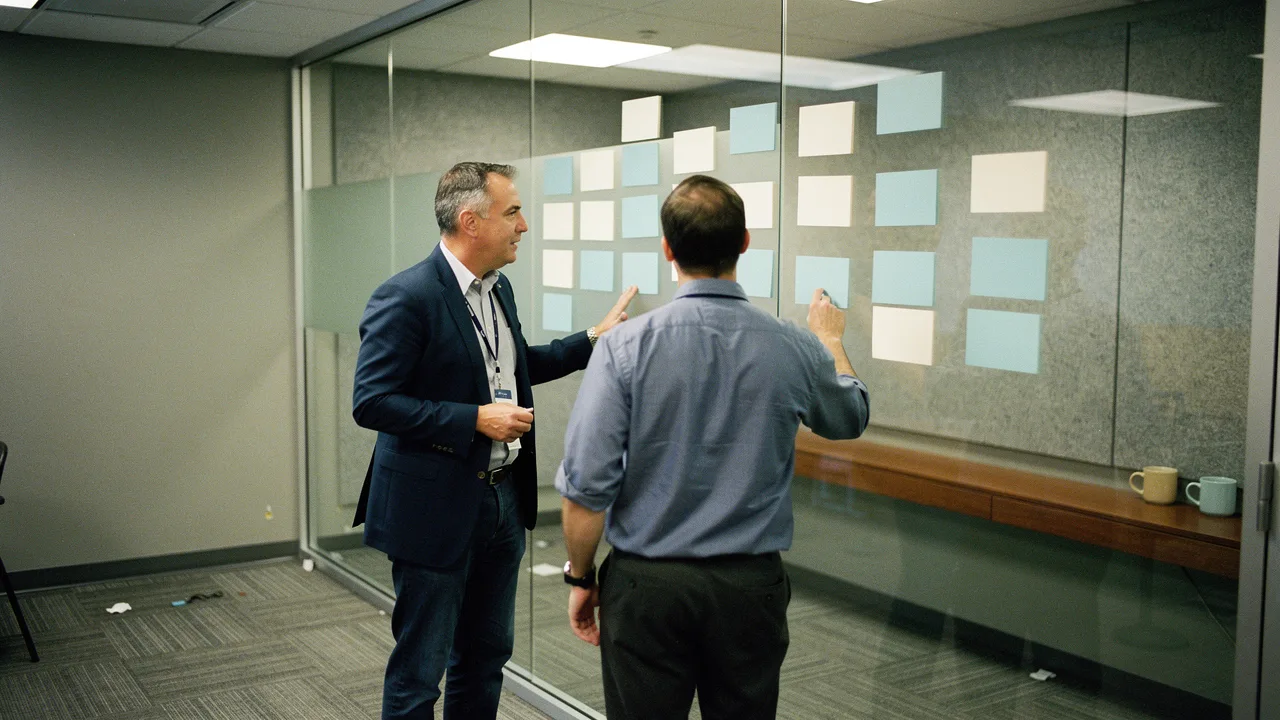
Public sector organizations increasingly mandate Agile methodologies to remediate historical IT procurement failures, cost overruns, and prolonged delivery schedules (gao.gov; dhs.gov). Federal standards standardize modular acquisition strategies, requiring teams to deliver small, functional software increments rather than monolithic releases (techfarhub.usds.gov).
A formal study by the U.S. Government Accountability Office identified 32 effective practices for applying Agile software development methods to federal IT projects (gao.gov). The GAO organized these 32 practices across five core project management activities: strategic planning, organizational commitment and collaboration, preparation, execution, and evaluation. These practices structure oversight and execution across federal technology initiatives.
Target Increment Duration <= Mandated Delivery Cap (Weeks)
Institutional policies establish operational parameters for software delivery across major public departments:
- Department of Homeland Security directives mandate Agile as the required development approach across all department IT programs and projects (dhs.gov).
- The Department of Homeland Security defines Agile delivery as an iterative approach delivering solutions incrementally via close collaboration, frequent reassessment, and continuous adaptive planning, development, testing, and integration.
- The federal TechFAR Handbook designates Agile development as the preferred methodology for digital service software contracts (techfarhub.usds.gov).
- Federal acquisition guidance directs contractors to prioritize simple code architectures, frequent testing cadences, and rapid delivery of functional system segments.
Team Dynamics, Psychological Safety, and Delivery Performance#
Agile practices positively influence job and career satisfaction, job engagement, psychological safety, and project delivery success. A research survey published in the Engineering Management Journal examining software development teams with extensive agile experience demonstrated that agile practices positively influence job engagement, career satisfaction, psychological safety, and project delivery success (tandfonline.com).
However, the survey also reported high levels of job stress among practitioners, which negatively affects job satisfaction and project delivery results (tandfonline.com). Consequently, sustaining software delivery success requires technical management to balance iterative pacing with sustainable operational workloads (opencourse.inf.ed.ac.uk). In Agile software engineering, automated pipelines require formally defined tests, while agile practices support psychological safety and project delivery success.
To transition an iterative delivery pipeline toward sustainable velocity this week, engineering leadership should apply three operational steps:
- Audit current sprint backlogs to separate core deliverables from negotiable scope constraints (projectresources.cdt.ca.gov).
- Integrate automated testing suites directly into deployment pipelines to formalize verification (opencourse.inf.ed.ac.uk; arxiv.org).
- Establish a standard refactoring allocation in each development iteration to counteract architectural technical debt (doi.org).
| Dimension | Waterfall Methodology | Agile Methodology |
|---|---|---|
| Scope and Constraints | Fixed scope determined in upfront planning; resources and time are estimated and adjusted around it | Fixed time and fixed resources; non-core scope is treated as the primary negotiable constraint |
| Team Organization | Sequential handoffs between specialized functional silos (analysts, developers, testers) | Cross-functional teams of 3 to 9 members sharing collective end-to-end delivery responsibility |
| Stakeholder Engagement | Involvement is largely confined to requirements kickoff and final acceptance testing | Continuous collaboration before, during, and at the end of each development iteration |
| Flexibility to Change | Rigid process with limited adaptability to modifications once a project phase completes | Rapid adaptability driven by continuous reassessment and frequent user feedback loops |
| Activity | Core Operational Purpose | Role in Development Lifecycle |
|---|---|---|
| Coding | Central activity to understand, communicate, and learn system behavior | Serves as the foundational medium for building and expressing system functionality |
| Testing | Embodying software requirements and objectively assessing software quality | Drives ongoing coding efforts and prevents post-release quality degradation |
| Listening | Understanding customer requirements and communicating project priorities efficiently | Captures business scope through on-site collaboration and user story cards |
| Designing | Structuring system logic and organizing architectural relationships | Maintains simple, evolvable architectures via continuous and systematic refactoring |
Agile Sprint, Schedule & Cost Estimator
Estimate the number of iterations (sprints), delivery timeline in weeks, and project budget based on total backlog story points, historical team velocity, team composition, and blended engineering rates.
Estimated Sprints Needed:
Estimated Calendar Time:
Cost per Sprint:
Total Estimated Release Cost:
Frequently Asked Questions
What is the Agile methodology?
Agile methodology is an iterative development approach that delivers software solutions incrementally through close collaboration, frequent reassessment, continuous adaptive planning, testing, and rapid response to changing requirements between self-organizing teams.
What are the key principles of the Agile Manifesto?
Core practices include the planning game, on-site customer, small releases, system metaphor, continuous integration, simple design, testing, refactoring, pair programming, collective ownership, coding standards, and maintaining a sustainable 40-hour work week.
Agile software development methodology example
Extreme Programming (EP) is an example, which operationalizes four activities-coding, testing, listening, and designing-alongside practices like pair programming, continuous integration, test-driven development, and frequent small software releases.
What is Agile methodology compared to Waterfall?
Agile delivers solutions in short, iterative cycles with negotiable scope and continuous stakeholder input, whereas Waterfall follows a rigid, sequential lifecycle with a fixed upfront scope and handoffs between specialist silos.
Sources
- Use of Agile Practices in Start-ups - arxiv.org (2026-08-24)
- Full article: Agile Practices and IT Development Team Well-Being - tandfonline.com (2026-01-01)
- Agile Methodology for Software Development and Delivery for Information Technology - dhs.gov (2022-03-21)
- Software Development: Effective Practices and Federal Challenges in Applying Agile Methods | U.S. GAO - gao.gov (2012-07-27)
- TechFAR Handbook for Procuring Digital Services Using Agile Processes Executive Summary - techfarhub.usds.gov (2025-10-20)
- Different approaches to agile software development - opencourse.inf.ed.ac.uk (2026-03-16)
- The Right Amount of Technical Debt in an Agile Context - doi.org (2025-01-01)
- The Right Amount of Technical Debt in an Agile Context | Springer Nature Link - link.springer.com (accessed 2026)
- Technical Debt Management: The Road Ahead for Successful Software Delivery - arxiv.org (2024-03-11)
- 1.1.4 Waterfall and Agile | Project Resources - projectresources.cdt.ca.gov (accessed 2026)
- Agile vs. Waterfall - software.af.mil (accessed 2026)